
Oconee County Court Records After Arrest
Oconee County court records after a jail arrest are not the same as the jail roster. The roster starts with custody: name, booking time, booking charges, bond fields, holds, and other jail-management data. The formal court record is handled through the Clerk of Superior, Magistrate, and Juvenile Courts and the Tyler Technologies Case Management Plus Web Search system linked from the county docket page. That court record may show the filed charge, court dates, proceedings, images for approved users, and later outcomes such as dismissal, plea, verdict, sentence, or nolle prosequi.
The distinction matters because the Oconee County Jail can list a booking charge before the Western Judicial Circuit District Attorney has reviewed, amended, reduced, or dismissed the charge. Use Oconee County jail inmate records for current custody and booking details. Use Oconee County jail mugshots for the booking-photo question. Court records after an arrest belong with the Clerk docket, certified-copy process, and prosecutor routing.
Find Oconee County Court Records
The official court-search starting point is the county page for Superior and Magistrate Court docket searching at Oconee County Superior and Magistrate Court Docket Search. That page links to Tyler Case Management Plus Web Search. The research file shows that the Tyler system requires an account and login. After login, the user guide says public records can be searched by party name, associated party name, or exact case number, with filters for court, division, and filing-date range.
- Start with the Oconee County JailTracker roster if the arrest is recent, and copy the name, booking date, case number, warrant number, arresting agency, and charge text if visible.
- Open the Clerk docket-search page, then use Tyler Case Management Plus Web Search after account login.
- Search by party name first. When a common name returns too many records, narrow by court, division, or filing-date range.
- If the jail record gives a case number, use exact case-number search and keep punctuation or spacing intact.
- Open the result and check the charge list, proceeding history, court dates, images if available, and disposition fields.
The Oconee County Clerk of Courts office is the local court-record custodian. The Clerk is Angela Elder-Johnson, and the public counter is Room 208 at 23 North Main Street in Watkinsville. The office phone is (706) 769-3940, and published hours are Monday through Friday, 8 a.m. to 5 p.m. The Clerk page also identifies Superior Criminal and Magistrate/Superior Criminal staff labels, which helps when a call needs to be routed by case type.
The county docket-search page shows the local court-search route used for Oconee County court records after a jail arrest: Oconee County docket search page.
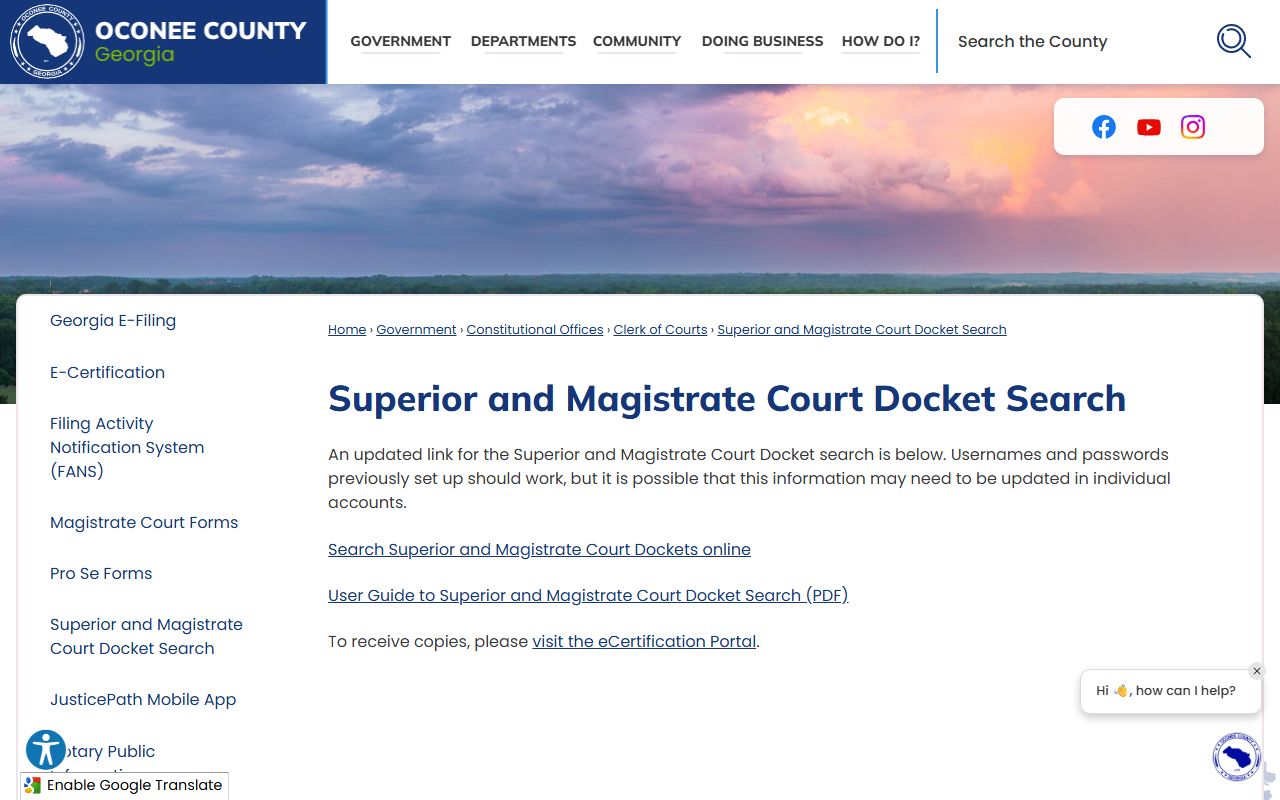
Use the county page to confirm that the Tyler search is the official Clerk-linked channel before relying on the login screen or a saved web address.
Oconee County Court Search Fields
The court search has more controls than the jail roster because it is built for case files, not live custody. The user guide captured in the research says party-name search can be narrowed by court, division, and filing-date range. Associated-party search can be used for a prosecutor, attorney, or other linked party. Exact case-number search is strict, so a number copied from the jail roster should be checked carefully before entry.
| Field or Mode | Type | Required | Notes |
|---|---|---|---|
| User Name | Login text | Yes | The Tyler login requires an account user name. |
| Password | Login password | Yes | Access begins after account login. |
| Search by Party | Search mode | After login | Use party name for a defendant search; court, division, and filing-date range can narrow results. |
| Search by Case Number | Exact text | Yes for this mode | The guide says exact case number is required. |
| Search by Associated Party | Search mode | After login | Used for names linked to a case, such as attorney or prosecutor. |
| Results per page | Pagination | No | The guide says users can modify how many results display at one time. |
| Add to Cart | Document action | No | Used for copies or images when payment processing is needed. |
The Tyler login screen is the gate to Oconee County court records after an arrest: Tyler Case Management Plus Web Search.
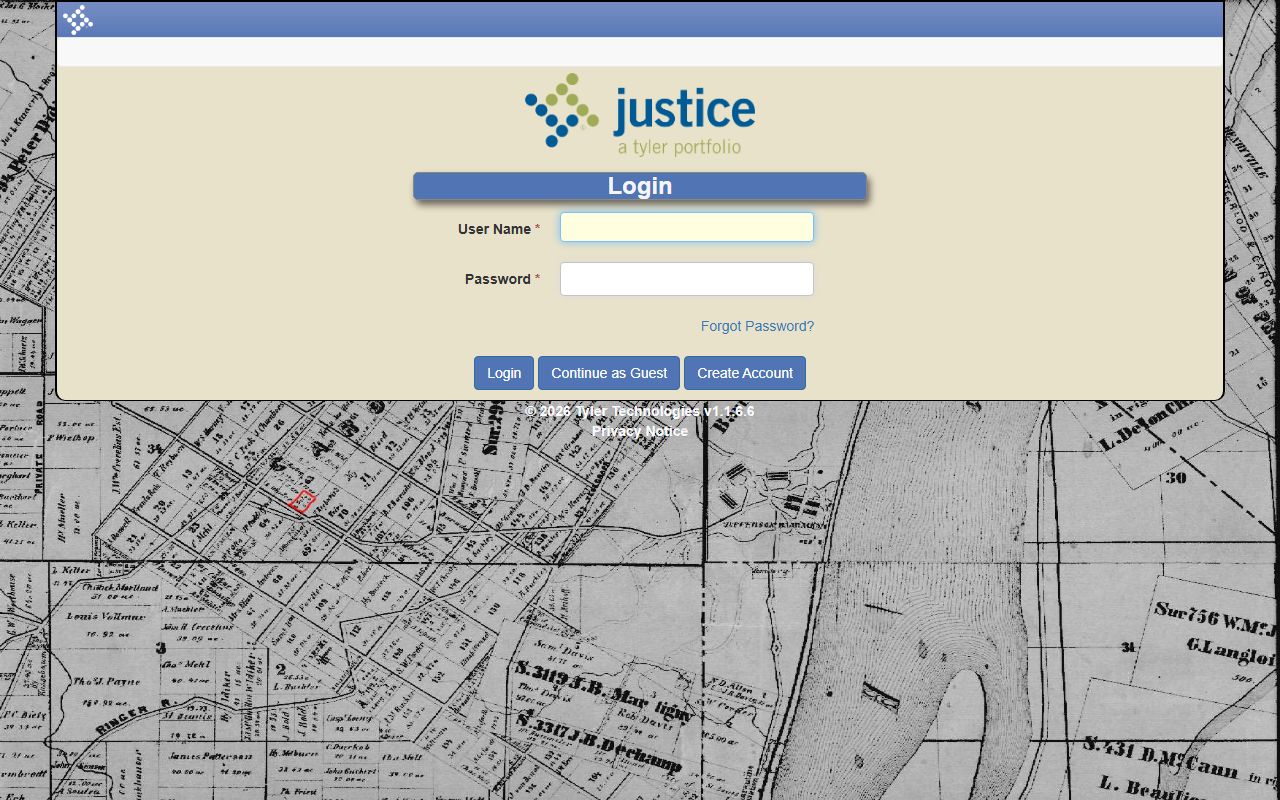
An online search that returns no case should not be treated as proof that no charge exists. The case may not be indexed yet, may be in a restricted category, or may need Clerk staff review.
Oconee County Charging Documents
After an Oconee County arrest, the charge path can move through several labels. At booking, the jail may list an arrest charge, warrant charge, or code from the arresting agency. Once the case reaches court, Georgia criminal matters may proceed through an accusation, indictment, citation, warrant-based filing, complaint-style filing, or another charging instrument depending on the offense and court. The research warns not to assume that a roster charge is the final filed charge.
| Document Type | Common Role | What to Check |
|---|---|---|
| Complaint or warrant-based filing | Often tied to the early arrest, warrant, or magistrate stage. | Compare the charge text, warrant number, arrest date, and first court entries. |
| Information or accusation | A prosecutor-filed charging document used in many Georgia criminal cases. | Check whether the prosecutor amended, reduced, added, or dropped a booking charge. |
| Indictment | A grand-jury charging document, often used for serious felony matters. | Look for the filed counts, offense dates, and later disposition for each count. |
The Western Judicial Circuit District Attorney prosecutes state criminal cases for Oconee County within its jurisdiction. The county officials page names Kalki Yalamanchili as District Attorney and lists the Oconee courthouse office at 23 North Main Street, Watkinsville, with phone (706) 769-3954. The District Attorney decides how a case is prosecuted, while the jail records the custody side and the Clerk maintains the docket.
Oconee County Charge Status
Charge status can change after the arrest. A pending charge may stay open while hearings continue. A prosecutor may amend a charge to correct or change it, reduce the level, add a related count, or decide not to proceed. Court records after an arrest should be read charge by charge because one count can be dismissed while another remains pending or ends in a plea.
| Status | Plain-English Meaning | Where to Verify |
|---|---|---|
| Pending | The charge has not reached a final court outcome. | Tyler docket, Clerk office, court date entries. |
| Amended or reduced | The filed charge changed from the booking or earlier court label. | Proceeding history, charging document, prosecutor filings. |
| Dismissed | The court record shows that charge was ended without conviction on that count. | Disposition field or order image if available. |
| Nolle prosequi | The prosecutor formally chose not to proceed on that charge. | Docket disposition or filed order. |
| Guilty plea or verdict | The charge ended in a conviction by plea or verdict. | Disposition, sentence entry, certified copy if needed. |
Note: A jail booking charge can be useful, but the Clerk docket is the better source for final filed charges and case disposition.
Bond After Oconee County Arrest
Bond information may appear in both jail and court records. Oconee County publishes local bond rules for property, transfer, cash, bonding-company, and online cash/card options. A cash bond must be paid in the exact amount because the jail does not give change. Most bonds except transfer bonds require a $20 cash bond fee. Property bonds have local limits: the surety property must be in Oconee County, must be improved real estate with a house on site, must have no pending tax payments, and must have equity at least four times the bond value.
| Bond Type | Oconee County Rule |
|---|---|
| Cash bond | Exact amount is required, and no change is given. |
| Property bond | Oconee County improved real estate is required; all owners sign before a jail officer. |
| Transfer bond | Contact the county where the property is located for that county's rules. |
| Bonding-company bond | The county publishes a bonding-company list; company fees are separate. |
| No-bond hold | A court order, warrant, detainer, or other hold can prevent release even when other charges show bond. |
Oconee County Warrants and Arrest
No official Oconee County Sheriff's active-warrant search, warrant list, or most-wanted database was found in the research. For a warrant tied to a case, use the Oconee Superior/Magistrate docket search by party name or exact case number. For current custody after a warrant arrest, use the Oconee JailTracker roster first, because a warrant often becomes visible to the public only after booking.
For direct confirmation, route the question to the office that controls the record. The Sheriff's Office handles sheriff-held warrant and jail records through phone channels and written open-records requests. The Clerk handles court records and docket entries. The Sheriff's Court Services division serves civil and criminal subpoenas, summonses, court papers, and handles inmate transport and extraditions. That makes Court Services relevant to warrant and court-process questions, but it is not a public warrant-search portal.
Charges vs. Convictions
An arrest and a charge are not a conviction. Oconee County court records after a jail arrest may show accusations that are still pending, charges that were amended, and charges that were dismissed. A conviction appears only after a guilty plea, guilty verdict, or other court outcome that creates a conviction record. This difference is critical when reading roster charges, case-search results, and background-check material.
| Point of Comparison | Charge | Conviction |
|---|---|---|
| Stage | An allegation filed at booking or in court. | A final result by plea, verdict, or qualifying adjudication. |
| Proof level | Can begin from probable cause or a charging decision. | Requires the criminal-case burden and court process. |
| Where it appears | Jail roster, warrant, charging document, or docket. | Disposition, sentence entry, criminal history, and certified court records. |
| Can it change? | Yes. It can be amended, reduced, added, or dismissed. | The conviction record can still be appealed, restricted, corrected, or otherwise affected by later orders. |
Sealed vs. Expunged Records
Georgia commonly uses the term record restriction rather than expungement for many criminal-history access limits. The research cites O.C.G.A. 35-3-37 record restriction guidance from Georgia Courts. A restricted record may be limited from ordinary public criminal-history access, but that does not mean every historical government file is destroyed or that every agency system changes at the same time.
| Term | Practical Meaning in Georgia | Limit |
|---|---|---|
| Sealed | Public access is limited by court rule, statute, or order. | Certain agencies or courts may still have lawful access. |
| Record restricted | Georgia's process limits access to qualifying criminal-history records. | Eligibility depends on the case outcome and the required prosecutor or court process. |
| Expunged | A common public term for clearing a record. | Georgia's current process often turns on record restriction, not a broad promise that all files vanish. |
Juvenile matters, restricted cases, active investigations, protected personal information, and some images may be withheld or redacted under Georgia open-records exemptions. Use the Clerk for court files and the Sheriff's Office for sheriff-held jail or incident records.
Certified Oconee County Court Records
When an ordinary docket view is not enough, the Oconee Clerk directs users to eCertification for certified court and real estate records. The Oconee eCertification page says requests can be submitted 24 hours a day through the GSCCCA eCertification portal. The process includes account creation, county and document selection, required fields, Clerk processing, final payment authorization, and an email with an authentication link for the purchased eCertified copy.
The eCertification page is the certified-copy route for Oconee County court records after an arrest when a plain search result is not enough: Oconee Clerk eCertification instructions.
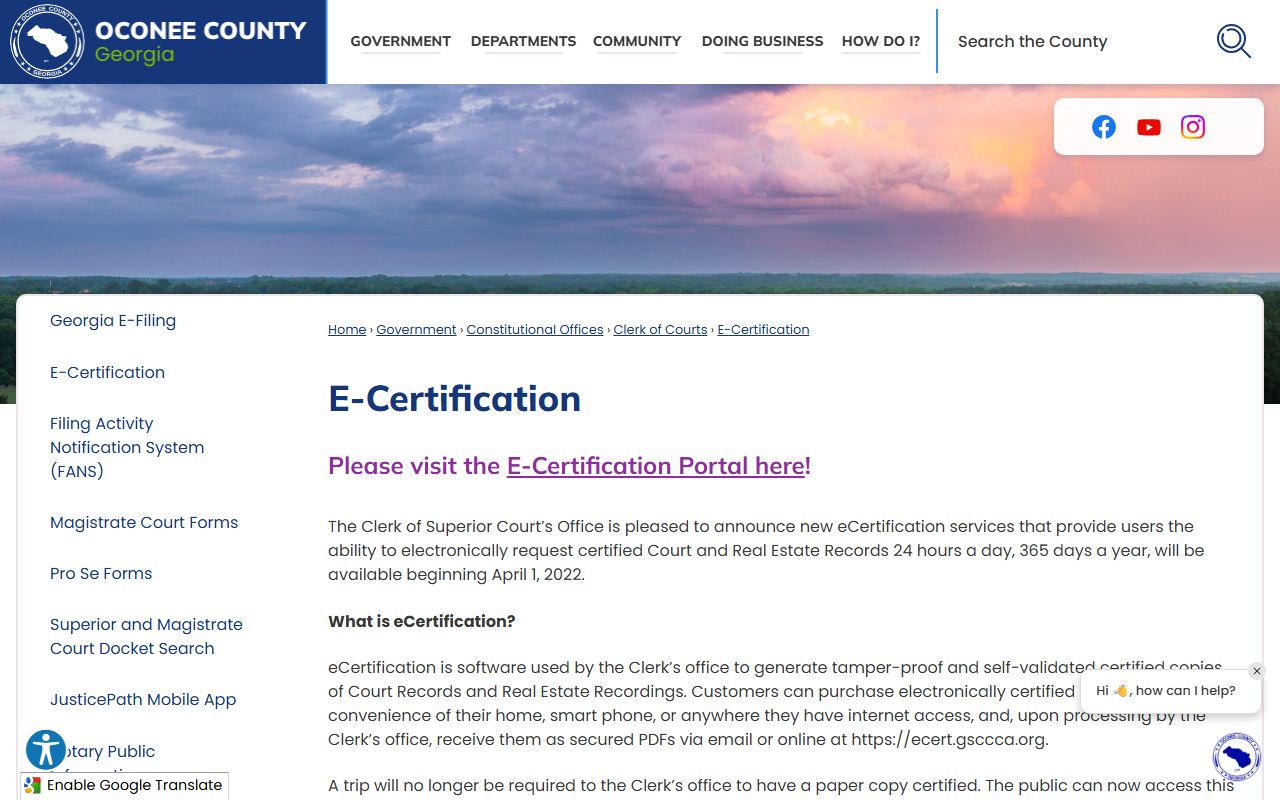
Certified copies are most useful when a court record must be shown to another court, an attorney, an agency, or a records-restriction reviewer.
Background Check Limits
Casual court lookup is different from a regulated background check. Court records after a jail arrest may be public, incomplete, restricted, or still changing. A person may have a booking record with no final conviction, a pending charge, or a restricted record that does not appear through an ordinary public search. For employment, tenant screening, credit, insurance, or other regulated uses, use a legally compliant consumer-reporting process instead of a general docket lookup.
Important: The search tools referenced here are not consumer reports and are not for FCRA-covered screening decisions.